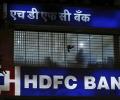
HDFC Bank Q1FY24 results analysis: Shares of HDFC Bank, the world's seventh largest financial entity, have advanced 2 per cent in two days, as against 1 per cent rise in the benchmark S&P BSE Sensex, after the lender reported its April-June quarter (Q1) results for financial year 2023-24 (FY24) on July 17. The S&P BSE Bankex index, meanwhile, has gained 1.3 per cent. While the near-term stock performance may remain sideways due to merger-related hiccups, analysts remain bullish on the stock's long-term prospects.

'Quality of management, corporate governance, allocation of capital, full disclosures should form the basis to decide investing in a particular stock.'

Bank of Baroda Q4 results: Key brokerages have raised their target prices on Bank of Baroda after the state-owned lender posted better-than-expected March quarter (Q4FY23) results. Analysts now see up to 29 per cent upside in the stock from a one-year perspective as they believe BoB is well-placed among the large public banks with nearly all key business metrics moving closer to the top-tier banks. Valuations, too, remain attractive despite steady strong quarterly performances.

Despite a healthy March-May quarter (Q3FY22) show by global IT consulting firm Accenture, Indian IT companies shed up to 3 per cent on the National Stock Exchange (NSE) on Friday as analysts continued to highlight medium-term pain points for the sector. The Nifty IT index settled 0.9 per cent lower on Friday, as against a 0.9 per cent rise in the Nifty50 index. According to analysts at ICICI Securities, Accenture's Q3 saw moderation in year-on-year growth rate across verticals and US regions, which signals at likely normalisation in revenue momentum for Indian IT services going forward.

This measure will ensure that the price of a scrip cannot move upward or downward beyond a limit set for the day.

'The recent correction in indices has made the markets cheaper to invest for the long term.'

Its production declined for the third consecutive year in financial year 2020-21 (FY21) to an 11-year low, while sales volume contracted for the second year to the lowest since FY15. The company manufactured around 1.08 million vehicles last fiscal, a decline from 1.17 million the previous year, and a steeper fall from its all-time high tally of 1.62 million reported in FY18.


Despite the onset of wedding season, the situation in apparel retail market remained unchanged and saw sharp decline in sales

A weak margin outlook in the near term and lack of fresh triggers may keep the Godrej Consumer Products (GCPL) stock under pressure. The stock, after tepid September quarter (Q2) results and marginal downward revision in earnings estimates, declined 3.5 per cent in trade on Friday. Though consolidated sales of the company, which owns the Goodknight and Cinthol brands, grew 8.5 per cent year-on-year (YoY), its operating profit declined because of the sharp contraction in margins.

FIIs accumulated India's top-listed companies at an average valuation of around 16 times.

The chemicals sector's recovery could be delayed until FY25 if the current trends of weak demand and flat pricing continue. Following a subdued September quarter, the revenue and profit performance of listed chemicals companies are anticipated to fall short of initial expectations of an improvement. Despite some price stability, the demand trajectory remains uncertain.
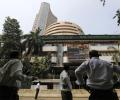
The Nifty PSU Bank pared losses to end flat after falling as much as 1.05%

For top IT services firms, revenue growth in FY15 was the slowest since the Lehman crisis

Investors are anxious over the US-China trade tension, a sharp devaluation in yuan and uncertainty over Kashmir issue.

The operating environment is unpredictable, but if the bank can't give a clear picture of what's in store, calling the bottoming out of its asset quality stress is nearly impossible.
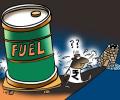
Inflation in food articles, fuel and power contracted in July.

In the past 12 months, such earnings have grown in double digits in Europe, the US, Japan and South Korea.

Unless companies press the pedal on implementation, further stock price gains might be limited, says Hamsini Karthik.

Monsoons have had limited effect on market returns for a given year, report Sachin Mampatta and Sundar Sethuraman.

Despite a shaky Q3, conviction over the stock remained high, with 65 per cent of the analysts polled on Bloomberg retaining their 'buy' recommendation.

Besides foreign flows, corporate earnings and US Federal Reserve chief Janet Yellen's testimony to the nation's legislature are also likely to impact investor sentiment.

The turmoil on the Street and a continued fall of the rupee may affect growth stocks, pushing equity investors back to the relative safety of defensive counters, or forcing them to flee markets, or both.

Risk-averse investors can hold up to 10 per cent of their portfolio in gold, while aggressive ones can keep five per cent.

Oil and gas sectot may not put up good numbers in Q4.

There was broad-based rally with participation across sectors creating enormous wealth for investors but starting 2018, the rally got concentrated into select large-cap companies with under performance in broader markets.

While Raghuram Rajan has said in the past that other factors, including domestic fundamentals, outweigh the US Fed policy meet, this time it would be different

Spiralling prices pinched the pocket of consumer as edible oil, fuel and many other commodities turned dearer this year amid pandemic-induced disruptions but the inflationary pressure is anticipated to ease, though marginally, in the coming months. As consumers, at retail as well as wholesale levels, are willy-nilly learning to live with the new normal of curbs to contain the spread of coronavirus infections, experts are of the view that elevated inflation is likely to stay longer. After dealing with the devastating blows from the second COVID wave, especially during the April-June period, the economy is well on the revival path but the emergence of Omicron might unsettle the recovery trajectory in the short term.

But experts say downside limited, pockets of opportunities for investors

Combined debt-equity ratio of top companies declines but interest expenses outgrow profits.

An analysis of year-wise movements of average global crude oil prices versus India's GDP reveals no inverse correlation, contrary to wide belief.

Analysts now expect India Inc to report a decline in both top line and bottom line for the September quarter.

Shares of Yes Bank may face selling pressure as the Reserve Bank-mandated three-year lock-in period for individual investors and exchange-traded funds is ending on Monday, according to analysts. The analysts expect distress on the bank counter on Monday as they expect investors, primarily the nine banks led by State Bank, which picked up almost 49 per cent of its stocks in March 2020 for Rs 10 per share -- at a premium of Rs 8 on the face value as part of the RBI bailout, making an exit. Exchange-traded funds are also likely to press the exit button.

The Reserve Bank of India (RBI) has announced a dollar-rupee two-year sell-buy swap auction for $5 billion on March 8, which will suck out rupee liquidity from the system. The swap will be in the nature of a simple sell/buy foreign exchange from the RBI side, in which a bank will buy US dollars from the central bank and simultaneously agree to sell the same amount of US dollars at the end of the swap period. "With a view to elongating the maturity profile of its forward book and smoothen the receivables relating to forward assets, it has been decided to undertake sell/buy swap auction of $5 billion on March 8, 2022," the RBI said in a statement. The auction cut-off will be based on the premium amount in paisa terms up to two decimal points.
An action on the rate front is unlikely to figure in Rajan's plan for the moment.
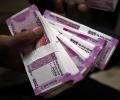
Centre took Rs 1,002 bn from here in 2017-18, sharply up from Rs 904 bn a year before and Rs 123.6 bn in FY14

The entry of SoftBank-backed Ola into the electric scooter (e-scooter) segment is set to power up the overall market and perhaps fast-track the adoption of battery-operated vehicles. But for manufacturers of internal combustion engine (ICE)-powered two-wheelers, such as Bajaj Auto, Hero MotoCorp, and TVS Motor, it will be a double whammy. Not only will they have to contend with the aggressive pricing of Ola's scooter and incur a loss at each unit of the e-scooter sold, the volumes of their regular (ICE) models, too, could feel the squeeze, observed analysts. Ola is expected to price its e-scooter in the range of Rs 85,000-1.1 lakh.

Crude oil prices have more than doubled, pushing up India's import bill and raising fears of a higher current account and fiscal deficit. This will impact corporate earnings.

A financial turnaround in Tata Steel and Tata Motors has come as a shot in the arm for Chandra.
After years of losing money on two of the group's biggest bets - global steel business and domestic passenger cars - there are strong signs of a revival in both businesses.
 © 2026 Rediff.com - Advertise with us - Disclaimer - Privacy Policy - Sitemap - Feedback - About us - Terms of use - Grievances